Skip to product information
1 of 5

Arrakis

Arrakis DARC-S8 Bundle

Arrakis DARC-S8 Bundle

Regular price $3,899.00 USD
Regular price Sale price $3,899.00 USD
Sale Sold out
Shipping calculated at checkout.

Arrakis DARC-S8 Bundle

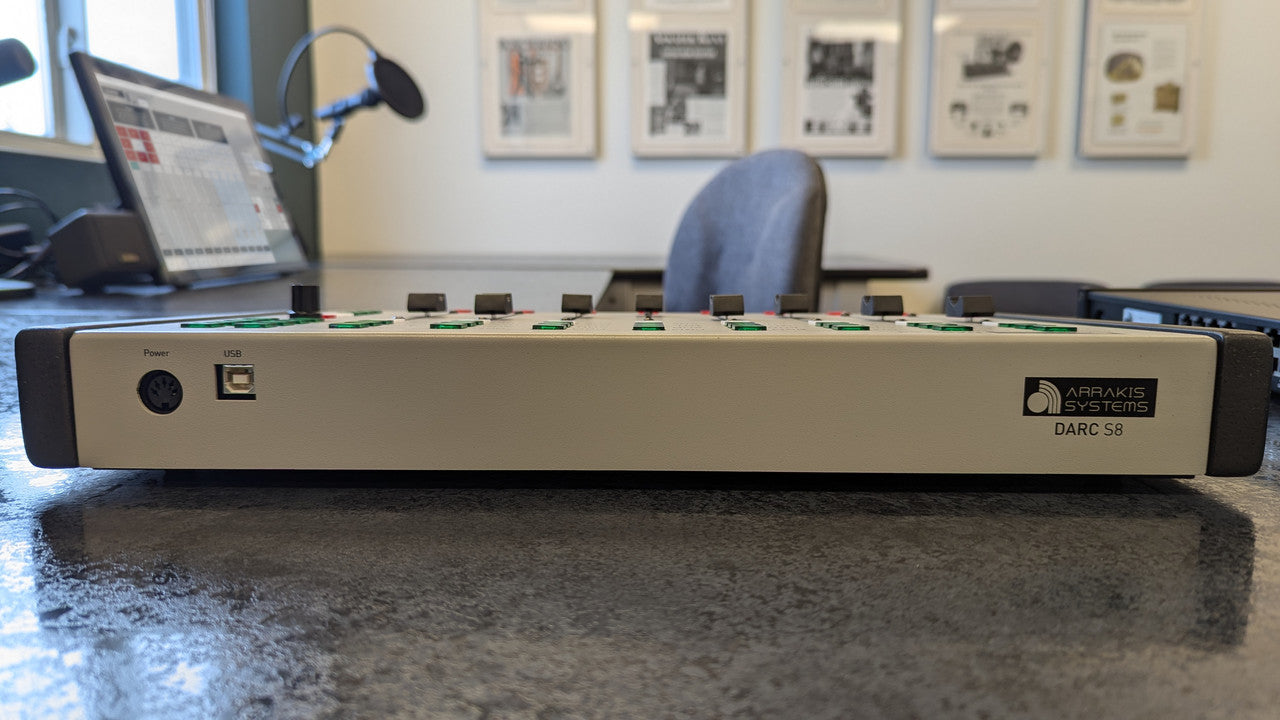
What This Arrakis DARC-S8 Console Bundle Actually Is This bundle gives you a smaller, more budget-conscious entry point into Arrakis's networked broadcast console line without cutting corners on the actual audio engineering underneath it. You get the DARC S8 physical fader surface, the 16-channel DARC Virtual software license, and one Simple-IP-16A audio node, all built around the same Dante audio-over-IP backbone used in the larger Arrakis consoles. This particular bundle does not include a PC, so you'll need to supply your own computer to run the DARC Virtual software, which is a common setup for stations or studios that already have a machine they trust and would rather not pay for hardware they don't need. With one Simple-IP-16A node in the box, you get 8 stereo or up to 16 mono audio inputs and outputs right out of the gate, which is enough for a single host studio, a small production room, or a compact podcast setup. If you outgrow that later, the system is built to expand with additional nodes rather than requiring a replacement. This is a good fit for anyone who wants a real AoIP console without paying for channel count or connected hardware they don't currently need. How the DARC S8 Fader Surface Is Laid Out The S8 gives you 8 physical fader channels, each with dedicated Program, Audition, and Cue buttons so you can manage individual sources without digging through software menus mid-broadcast. Every channel includes a long-life OLED display showing which source is currently assigned to that fader, so operators always know what they're touching without guessing. Monitor control lets you switch between Air, Program, and Audition feeds, along with volume adjustment and toggling between Monitor, Headphone, and Cue paths directly from the surface. Bright LED bargraph meters for Program and Audition give you a constant visual read on levels without needing to glance at a separate screen. Because the board runs on Dante with gigabit connectivity, any Dante-enabled source on your network can be assigned to any of the 8 faders, so you're not limited to whatever happens to be physically wired to that channel. The board also supports mix-minus buses for phone callers or remote guests, and mic preamp needs can be handled either through the ARC-MIC-PRE accessory or a connected Simple IP node. Being a purely digital control surface, the S8 keeps your audio free from signal degradation and RF interference, which matters in busy broadcast environments with a lot of nearby equipment. All of your actual input and output wiring runs to the Simple-IP-16A node rather than the console itself, keeping cabling at the desk simple and the studio layout clean. DARC Virtual 16 Software and What It Controls The included DARC Virtual 16 license is what actually runs the mix behind the S8 surface, handling routing, levels, and channel assignment for every source connected to your Dante network. It can be operated as a standalone console or as part of a larger AoIP network spanning multiple studios, giving you room to grow without swapping out the software down the line. Each input channel can be labeled, color-coded, and saved into a user profile, which becomes genuinely useful once you're running more than one show out of the same studio, since switching between programs becomes a single click rather than a manual re-patch. The software supports single-channel, post-fader recording, a detail that podcasters in particular ask for when they want to capture and later edit individual mic tracks separately from the finished mix. Because this is a Dante-based system, DARC Virtual can also control any other Dante device on the same network, not just the hardware included in this specific bundle, so bringing in outside equipment later doesn't require a new license or a different piece of software. User profiles retain more than channel names too, they also store volume levels and on/off states, meaning a full studio reset between programs takes just a few seconds. For any operation running multiple hosts or formats through one physical room, this is the feature most likely to save real time day to day. What the Simple-IP-16A Node Adds to the System The single included Simple-IP-16A node is your bridge between physical studio gear and the Dante network, handling 16 mono inputs and 16 mono outputs, or 8 stereo in and out if that better matches your setup. It's AES67 and Dante compatible, supports both balanced and unbalanced analog connections, and connects using standard RJ45 cabling rather than punch blocks or long analog snake runs. The node runs on its own external power supply, so a power issue there doesn't take down your entire console, which matters even in a smaller single-studio setup where uptime is still a priority. If you decide to expand later, adding a second Simple-IP-16A is as easy as connecting it to your network switch, since Dante Controller detects new nodes automatically within seconds. This is also the piece that would let you eventually link a second studio into the same console setup over standard network infrastructure instead of running new point-to-point cable between rooms. For anyone who's dealt with the tangle of analog patch cables in a small studio before, this single node alone removes most of that mess. Why the PC Isn't Included and What You'll Need This bundle is priced and packaged for buyers who either already own a suitable computer or prefer to source their own rather than pay for hardware bundled in at a markup. Since DARC Virtual is a Windows-based software console, you'll want a machine with enough processing power and RAM to run it reliably, particularly if you plan to run any other broadcast software alongside it. This setup is common in stations that have an existing IT department or established hardware standards, where matching a new console to current infrastructure matters more than convenience out of the box. It does mean a little more setup work on your end compared to a bundle that ships fully configured, but it also keeps costs down for anyone who doesn't need a new PC as part of the deal. Once your computer is ready, installation mainly comes down to connecting the S8 surface via USB and connecting the Simple-IP-16A node to your existing network. Who This Console Bundle Is Best Suited For This is a strong option for smaller radio stations, single-studio podcast operations, or campus and community stations that want real AoIP flexibility without paying for channel count or hardware they don't currently need. It works well for facilities that already have a computer they trust running their studio and simply need the console hardware and software to go with it. Because the system is Dante-native from the start, it's also a smart long-term choice for any station that expects to eventually link additional studios or expand channel count, since the groundwork is already networked rather than analog. Podcasters recording a small number of hosts or guests will get real value from the individual channel recording feature, cutting down on post-production syncing work. Overall, this bundle suits buyers who want the same underlying broadcast console technology as the larger Arrakis systems, just scaled down to a size and price that fits a smaller studio.

View full details