Arrakis
Arrakis DARC-Surface 8 Console
Arrakis DARC-Surface 8 Console
Couldn't load pickup availability
Arrakis DARC-Surface 8 Console
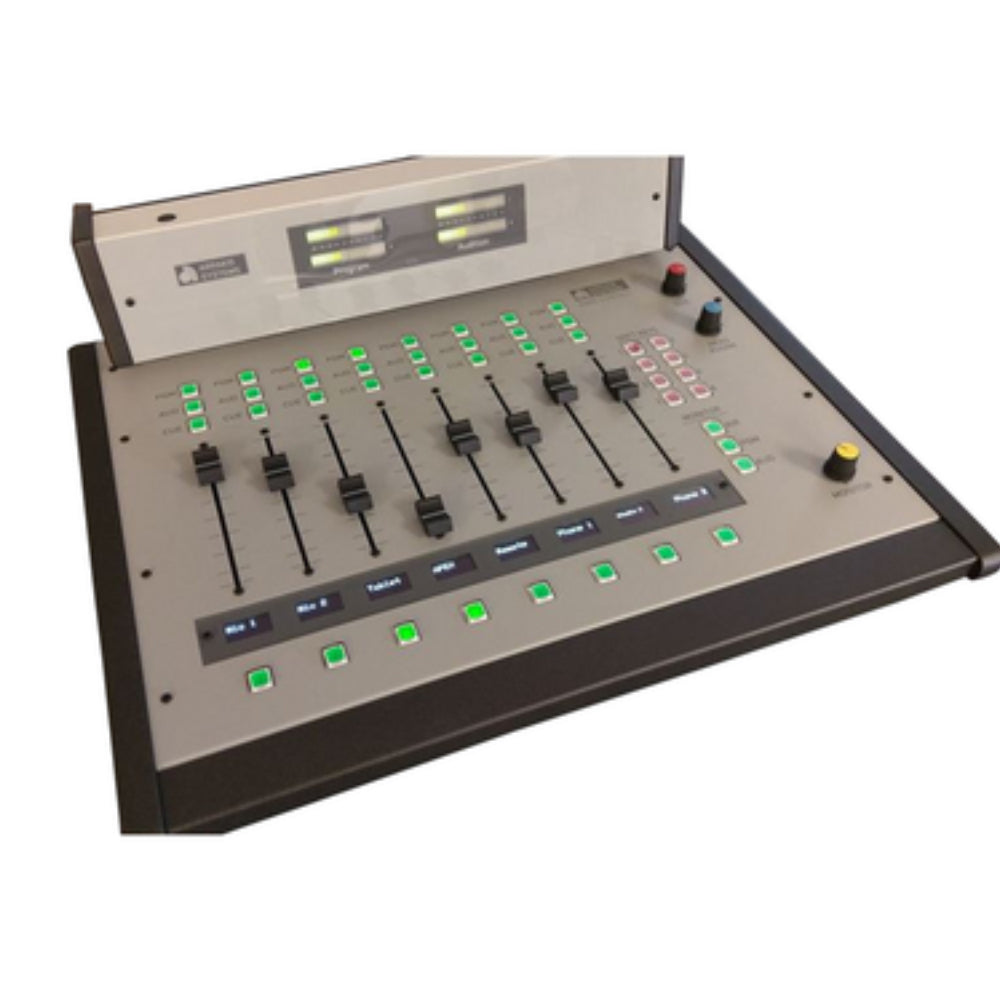
What This Arrakis DARC Surface 8 Console Actually Is This is the DARC Surface 8 on its own, a compact 8-channel physical control surface for Arrakis's Dante-based digital console system, sold without the DARC Virtual software license or any Simple IP audio nodes included. You'll need to already have Dante audio sources on your network along with a separate DARC Virtual software license to actually operate the console, making this a good option for anyone expanding an existing DARC installation or assembling a custom setup rather than starting completely from zero. The Surface itself is a pure digital control surface, meaning no audio actually passes through the board, all of the mixing happens inside the DARC Virtual software running on a Windows PC, while the Surface gives you the physical faders and hands-on control over that software. Being AoIP-based, it can reach any audio source or output already available on your Dante network, so as long as you have compatible Dante gear and the required software license in place, this console slots right into your existing system. This is essentially the hardware side of the DARC platform, meant for buyers handling software licensing and network audio sourcing on their own. How the 8-Channel Fader Surface Is Built and Laid Out The Surface 8 gives you 8 physical fader channels, each equipped with dedicated Program and Audition buttons for quick source control right at the board without needing to touch the software. Long-life OLED displays sit above each channel, showing exactly which source has been assigned to that fader, and these displays are high contrast and easy to read even at a glance. Two pairs of bright, 20-segment stereo bargraph LED VU meters give you a constant visual read on your levels, built using LED technology chosen specifically for a long operational lifespan. All of the momentary switches on the board are rated for 5 million operations and are LED illuminated, so you won't be dealing with worn switches or burnt-out bulbs over time. The faders themselves use conductive plastic construction for high resolution and long service life, and they come with dust covers to help protect them and extend that lifespan further. Four programmable buttons on the Surface let you swap input and output assignments directly at the console, without needing to jump into the DARC Virtual software screen every time. Why This Is a Pure Digital Control Surface Because the Surface 8 handles no audio internally, all of your input and output wiring connects to your Simple IP units, or whatever Dante-enabled devices you're running, rather than to the console itself. This compartmentalized design keeps wiring at the console position to a minimum, since the Surface only requires a USB connection and an RJ45 connection for its LED meter input. All of the actual mixing takes place inside the DARC Virtual software on your PC, with the Surface acting purely as a physical interface for controlling that software in real time. Being digital rather than analog also means your signal path stays free from RF interference and signal degradation, since no audio runs directly through the board's internal circuitry. This design also allows the console to be Windows-based, meaning you can pair it with any remote control app to manage your board from anywhere with an internet connection, not just from the physical studio desk. What You'll Need to Supply to Run This Console Since this listing includes only the Surface 8 hardware, you'll need a separate DARC Virtual software license sized appropriately for your channel count, along with Dante audio sources already available on your network, whether that's through Simple IP nodes, other Dante-enabled hardware, or devices such as a Dante AVIO adapter. You'll also need a Windows PC capable of running the DARC Virtual software reliably, since that's where the actual mixing engine lives. This setup is common for stations expanding an existing DARC installation, adding an additional control surface to a studio that already has network audio infrastructure in place, or facilities with specific software licensing or PC standards they'd rather manage independently. If you don't already have Dante sources or a DARC Virtual license, you'll want to budget for those separately before this console becomes usable. Output Buses and Connectivity You Get With This Surface The Surface 8 gives you access to Program, Audition, Monitor, Cue, and Headphone output buses, all of which can be assigned to any output on your connected Dante network, commonly one of the Simple IP units offering four stereo outputs per box. The built-in Cue function lets you play audio off-air through your monitor, cue, or headphone path, useful for previewing content before it goes live. Mic channels include an automatic monitor mute feature, muting the monitor output and routing audio to headphones instead when a mic channel is activated, with talkback audio following that same headphone path. The power supply is auto-sensing across 110 to 220VAC and carries UL, CE, CS, and CB certifications, meaning the Surface is ready to run in studios anywhere in the world without needing a separate voltage converter or regional power adapter. Who Should Be Buying the Surface 8 on Its Own This standalone console is built for buyers who already have, or are separately sourcing, the DARC Virtual software and Dante audio hardware needed to run it, rather than those starting a studio build from scratch. It's a strong option for stations adding a second control point to an existing Dante network, or for small studios and podcast setups that already have network audio infrastructure and just need an additional compact fader surface. It also suits facilities with an established IT department managing PC procurement and network configuration separately from console hardware purchases. If you're starting completely fresh without any existing Dante infrastructure, one of the full bundles pairing the Surface with software and Simple IP nodes will likely serve you better, but for anyone expanding or customizing an existing setup, this gives you exactly the physical control surface without any redundant purchases.
Share